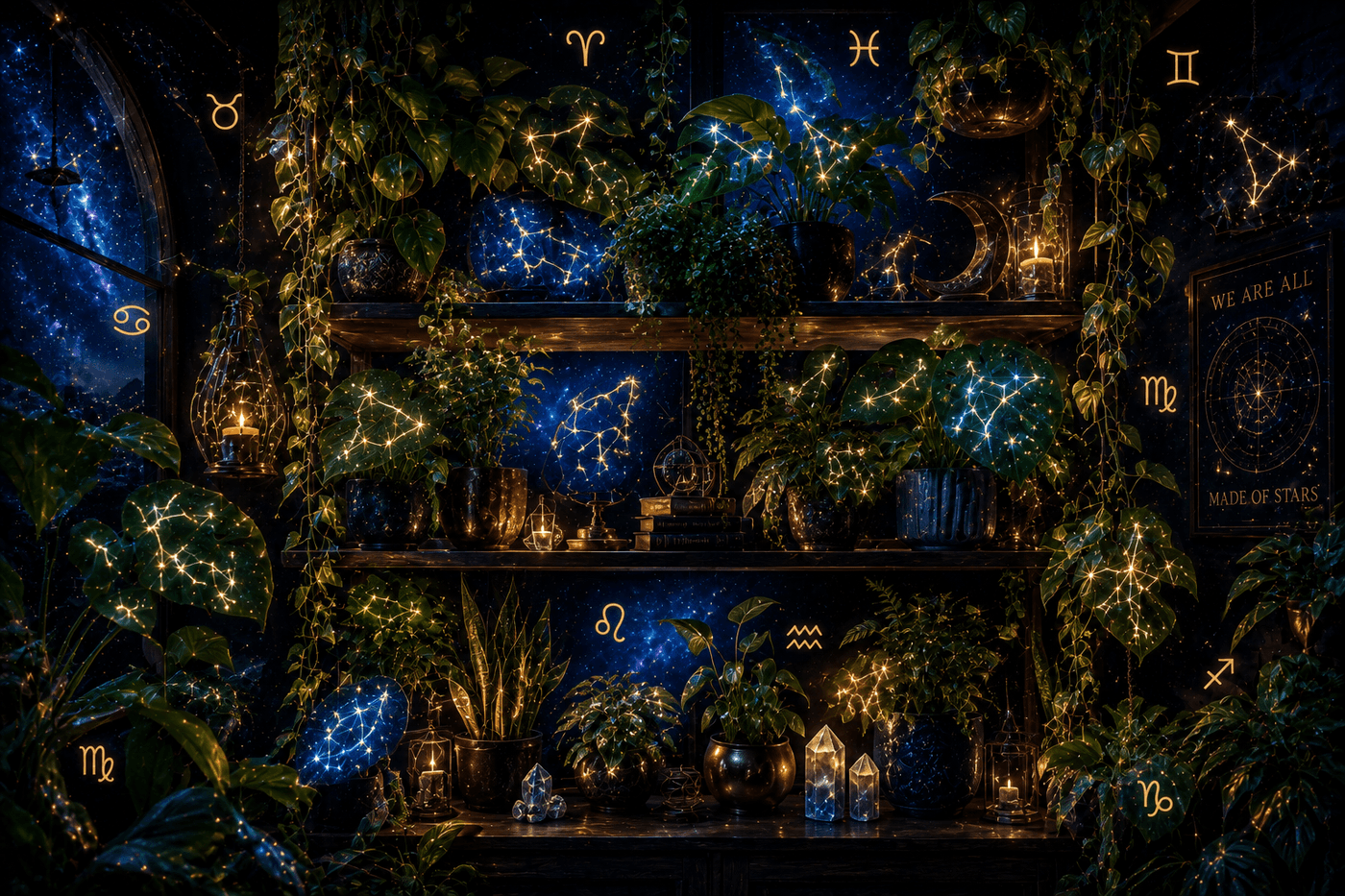
The Zodiac Signs as Houseplants (And Whether They'd Keep Them Alive)
Houseplants are a personality test with soil. The way someone treats a living thing that requires consistent, low-effort attention — but not too much attention, and not the wrong kind of attention, on a schedule that isn't always obvious — reveals more about their daily habits, their self-awareness, and their relationship with responsibility than almost anything else in their apartment. Your zodiac sign determines both which houseplant you ARE and whether, if someone gave you that plant, it would still be alive in six months. Both questions matter. Both answers are correct.
Some signs were born for plant parenthood. Some signs have good intentions and a graveyard of succulents as evidence. Here's the full botanical breakdown — which plant matches your energy, what that says about you, and an honest assessment of your plant survival odds.
♈ Aries — A Cactus That's Thriving Because It Requires Almost Nothing
Aries is the cactus — independent, resilient, low maintenance, and genuinely impressive when it flowers. The survival odds for Aries as a plant parent are actually decent, but only because they gravitate toward plants that can handle being forgotten between enthusiastic bursts of attention. Aries waters deeply when they remember, ignores the plant for two weeks, and then waters deeply again. The cactus doesn't care. The cactus was built for exactly this. The problem arrives when Aries impulse-buys a delicate fern and applies the same strategy. The fern does not survive. The cactus on the windowsill has been there for three years and is doing great.
♉ Taurus — A Pothos So Lush It's Taken Over an Entire Corner of the Room
Taurus is the pothos — easygoing, beautiful, grows abundantly when treated with consistent care and good conditions, and somehow always ends up larger than anyone expected. Taurus' plant parenthood survival rate is extremely high because they actually enjoy the routine of plant care. The watering is a sensory ritual. The pruning is satisfying. The watching-it-grow is genuinely pleasing in a way Taurus returns to regularly. Their plants are healthy, photogenic, and occasionally featured in the background of their food content. Every Taurus has at least one plant that has gotten so big it needed to be repotted twice. They repotted it both times with genuine enthusiasm.
♊ Gemini — A Spider Plant With Seventeen Babies Going in Every Direction
Gemini is the spider plant — perpetually producing offshoots, spreading in all directions simultaneously, somehow thriving on inconsistent attention, and genuinely impossible to kill through neglect alone. The spider plant's survival odds with Gemini as caretaker are good specifically because Gemini finds it interesting enough to maintain engagement. They'll go through a phase of aggressive propagation, giving baby plants to everyone they know. Then they'll forget about it for a month. The spider plant is fine. It was producing more babies during the forgetting period. Gemini returns to find the situation has expanded and finds this delightful rather than alarming.
♋ Cancer — A Monstera That Gets Talked to Regularly and Is Visibly Thriving
Cancer is the monstera — dramatic in the best way, deeply responsive to genuine care, and capable of extraordinary growth when someone actually pays attention to what it needs. Cancer's plant survival rate is the highest in the zodiac because they treat their plants the way they treat their people: with consistent attention, actual concern when something seems off, and the kind of care that goes slightly beyond what's technically required. Cancer has named the monstera. They talk to it. There is evidence that this works. The monstera has put out four new leaves this season. Cancer is proud in a way that requires no apology.
✨ A houseplant asks one thing: to be seen consistently. Not dramatically, not obsessively — just regularly checked on, with basic needs met and a little attention when something looks off. The signs who do this naturally are the signs who do it for people too. The correlation is not a coincidence. ✨
♌ Leo — A Bird of Paradise in a Statement Corner That Everyone Comments On
Leo is the bird of paradise — architectural, dramatic, unmistakably beautiful, and absolutely requires being in the best light in the room or it will make its feelings known. Leo's plant survival rate is good because they chose a plant that doubles as décor and the aesthetic investment keeps them accountable. The bird of paradise is in the corner of the living room where the light is best and where every person who visits immediately asks about it. Leo waters it on a schedule because letting it decline would conflict with the aesthetic and Leo's standards do not allow for that. The plant is thriving. It is featured in photos regularly. This was the plan from the beginning.
♍ Virgo — A Collection of Clearly Labeled Plants With a Watering Schedule in a Spreadsheet
Virgo doesn't have a plant. Virgo has a plant system. Each plant is labeled with its species, acquisition date, preferred watering frequency, light requirements, and last fertilized date. The spreadsheet is updated regularly. Virgo researched the specific soil composition for each variety before repotting. The survival rate is essentially one hundred percent because Virgo treats plant care as a solvable optimization problem and has solved it. The plants are impeccably healthy. Visitors find the labeled pots slightly intense. Virgo finds unlabeled pots slightly irresponsible. The plants have no complaints.
♎ Libra — An Aesthetic Array of Plants Chosen Primarily Because They Look Good Together
Libra's plant collection was curated for visual cohesion before practical consideration. The pots match. The heights are varied intentionally. The overall effect is genuinely beautiful and photographs extremely well. The survival rate is moderate — Libra waters when they notice the plants and noticing depends on whether they're going through a period of domestic attentiveness or a period of being distracted by seventeen other things. The plants that are easiest to care for are thriving. The temperamental ones are declining gracefully in a corner where Libra can't quite see them clearly. The overall tableau still looks good. Libra hasn't fully registered the situation in the corner yet.
♏ Scorpio — A Single, Dramatic Black-Leafed Plant That Perfectly Matches the Energy
Scorpio is the black prince succulent or the dark-leafed rubber tree — something uncommon, slightly moody, beautiful in an unconventional way, and quietly resilient underneath the dramatic exterior. Scorpio's survival rate is actually quite high because they research before they commit and only take on what they know they can maintain. The plant they chose was deliberate. It lives in a specific spot that was assessed for light quality before the plant arrived. Scorpio waters it on a schedule they determined through research rather than guessing. The plant is thriving. It suits the space exactly. This was always the intended outcome.
Scorpio's plant has never been posted online. The plant exists for Scorpio and for the space they share. It is doing well. That's all anyone needs to know.
♐ Sagittarius — Bought Four Plants in One Week, Named Them All, Lost Track of the Watering
Sagittarius' plant parenthood arc is the most recognizable one on this list: an enthusiastic acquisition phase, a naming phase, a brief period of devoted care, and then the slow drift of attention toward the next interesting thing. The survival rate is low to moderate depending on the plant's natural resilience. The succulents make it. The fiddle leaf fig does not. Sagittarius feels genuinely bad about the fiddle leaf fig and buys two more plants to compensate, which does not address the root problem but does mean the windowsill remains full and visually optimistic. There are always new plants being acquired. The graveyard is behind the other plants.
♑ Capricorn — A Single Well-Chosen Plant That Has Been in the Same Spot for Four Years
Capricorn has one plant. Maybe two. Each was chosen deliberately, placed correctly, and has been consistently maintained ever since. There's no impulse buying, no excessive collection, no plants acquired for aesthetic reasons without practical consideration. The plant that Capricorn has is in excellent health because Capricorn determined the correct care routine and executed it without deviation. The survival rate is extremely high and would be one hundred percent except for that one time they went on a long trip and came home to a situation. They've since arranged a plant-sitter for future trips. The system has been updated. It won't happen again.
♒ Aquarius — A Rare or Unusual Variety Nobody Else Has Heard Of
Aquarius didn't buy their plant at a garden center. They found it through a rare plant collector online or at an obscure market and it's a variety that most people can't identify when they visit. The care requirements are specific and Aquarius researched them thoroughly because the plant being unusual made the research interesting rather than tedious. Survival rate is good for the specific plant they chose and poor for any plant requiring purely routine care with no intellectual dimension. Aquarius can maintain attention when the plant is interesting enough to think about. The maintenance of something boring is harder. Fortunately, Aquarius only buys interesting plants.
♓ Pisces — A Beautiful, Slightly Dramatic Plant That Thrives on Emotional Energy and Inconsistent Watering
Pisces is the peace lily — sensitive to its environment, expressive when it needs something (it droops dramatically, then recovers beautifully once watered, which Pisces finds deeply relatable), and capable of genuine beauty when the conditions are right. Survival rate is moderate to good depending on whether Pisces is in a grounded period or a floating one. During grounded periods, the plants are watered and talked to and occasionally misted and doing beautifully. During floating periods, the plants communicate their needs through increasingly dramatic drooping and Pisces responds with genuine remorse and immediate watering. The cycle continues. The plants are mostly fine. The relationship between Pisces and their plants is the most emotionally textured one in the zodiac and Pisces wouldn't have it any other way.
Want more cosmic guidance?
Check Your Daily Horoscope